
Managed cyber security services for UK businesses
Cyber Essentials, Microsoft 365 hardening, endpoint and email security, MDR/SOC options, awareness training and secure AI adoption.
What we watch and manage
The controls most UK SMEs need, delivered and kept up to date by one team.

What managed cyber security services for uk businesses looks like in real UK operations.
Cyber Essentials & Plus
Certification preparation and ongoing alignment.
Microsoft 365 hardening
Conditional access, MFA, identity protection.
Endpoint protection (EDR)
Next-gen endpoint protection with response.
Email security
Anti-phishing, impersonation, attachment sandboxing.
Backup
Tested backup of M365 and critical workloads.
MDR / SOC / SIEM options
Managed detection and response, with optional 24/7 monitoring.
Dark web monitoring
Free credential check plus continuous domain-wide monitoring.
User awareness
Training and phishing simulation programmes.
Risk assessment
Practical, prioritised risk reviews.
Secure AI adoption
Governance and controls for safe AI use.
Start your cyber journey with the right review
Three fixed-scope reviews that help SMEs find the gaps, fix the basics and move into a managed cyber service - without buying a long list of products first.
Microsoft 365 Security Hardening Review
Turn the Microsoft security features you already pay for into a hardened, evidenced baseline.
Cyber Asset & Exposure Review
A clear view of devices, users, cloud services and internet-facing exposure - with a prioritised plan.
Cyber Essentials & Insurance Readiness
Evidence and remediation plan for Cyber Essentials, cyber insurance and supplier questionnaires.
Score your cyber posture in 60 seconds
Nine questions mapped to Cyber Essentials and insurer expectations. Get an indicative score and a prioritised gap list.
The 27 capabilities behind a defensible UK business
A clear, vendor-fluent breakdown of every control we deploy and manage - grouped into five domains.
Application & identity controls
Lock down how people sign in to apps, control what code can run, keep software patched, and stop public-facing systems being exploited.
Laptops, desktops & mobile devices
Every laptop, desktop and mobile is hardened, monitored and recoverable - the device controls Cyber Essentials and your insurer expect.
Email, web, firewall & remote access
The perimeter your users actually meet - email, web browsing, firewalls and remote access - is filtered, inspected and authenticated.
Identity, governance & risk
The controls that prove you're in control - identity governance, vulnerability management, DMARC and IT governance tooling.
Cloud apps, posture & WAN security
Microsoft 365, Google Workspace, AWS and Azure secured the way they should be - visibility, posture management and secure connectivity.
Browse all 27 capabilities
Searchable index across every control, mapped to Cyber Essentials, ISO 27001 and NCSC 10 Steps.
Read before you buy
Practical guides on the threats, the controls and the certification traps facing UK businesses right now.

The top cyber attacks facing UK businesses
Ransomware, business email compromise, credential stuffing, supply chain and AI-assisted fraud - what each looks like and the control that stops it.

Managed security operations centre (SOC): what it is and when you need one
In-house SOC, managed SOC or MDR - coverage, detection versus response, and the questions to ask a provider.
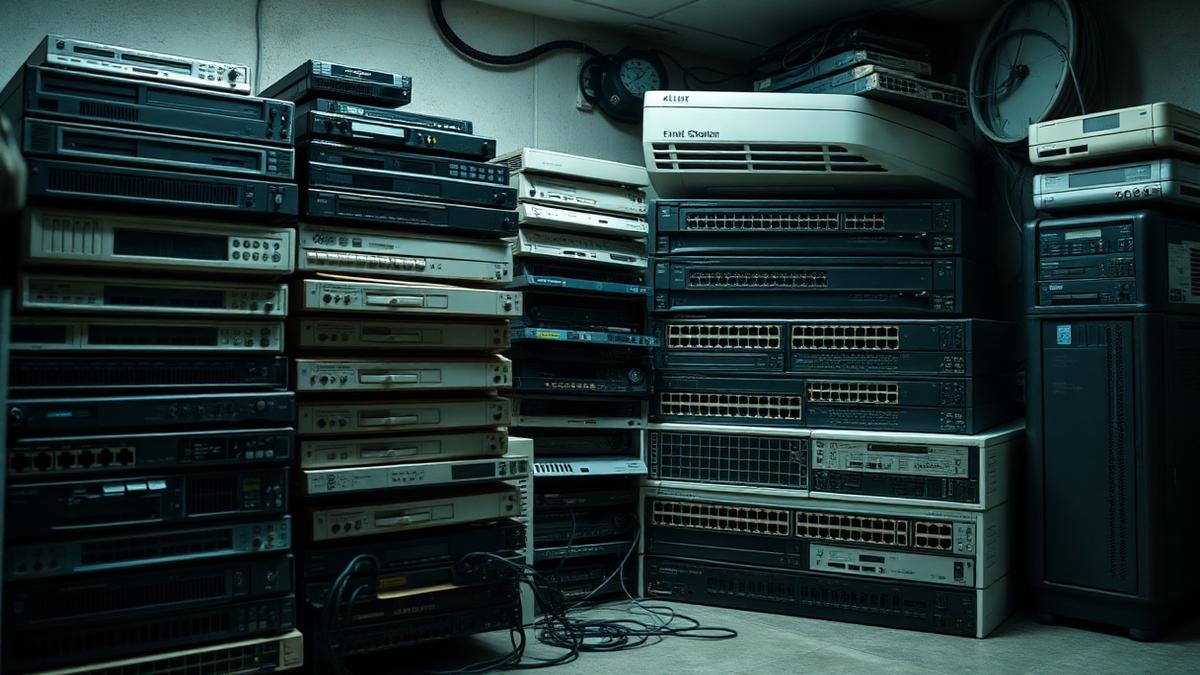
End-of-life devices and the risk to your Cyber Essentials certification
Unsupported operating systems, firmware and network kit are the most common reason UK businesses fail assessment. Here is how to stay ahead of it.
What happens when an alert fires
The part of a security contract that only matters on the worst day of the year.
- 01
The alert is triaged, not forwarded
A UK analyst looks at it and decides whether it is noise, something to watch or a live incident. You do not get a queue of raw alerts to interpret yourself.
- 02
Agreed containment runs immediately
Isolating a device or disabling an account is agreed in writing during onboarding, so a confirmed incident triggers the playbook rather than a phone call asking permission.
- 03
You are told what happened, in plain English
A named contact gets what was seen, what was done and what is still open. No jargon, no screenshot of a console.
- 04
We close it out and change something
Recovery, then a short review that ends in a configuration change, a policy change or a training action, so the same alert does not repeat monthly.
Alert triage by our integrated security team is business hours as standard. Round-the-clock monitoring is available under the Managed SOC tier, and we will not describe business-hours cover as 24/7.
Who does what when something goes wrong
We are accountable for
- Triaging every alert the tooling raises and telling you what it meant
- Executing the containment actions agreed during onboarding
- Keeping controls mapped to Cyber Essentials, ISO 27001 and NCSC guidance
- Maintaining the evidence pack insurers and auditors ask for
- A quarterly posture review against current guidance, not last year's
You stay accountable for
- Approving containment that stops people working, where you have asked to approve it
- Acting on findings we cannot fix for you, such as an unsupported line-of-business application
- Telling us about new systems, sites and starters and leavers
- Any legal or regulatory notification an incident triggers
What a managed service does not cover
- It is not a guarantee against breach
- Covering phishing, unpatched devices and weak credentials removes the easy routes in. A determined, targeted attacker is a different problem, and we will say so rather than imply otherwise.
- Unsupported software stays a risk
- If a critical application only runs on an end-of-life operating system, we can contain the risk but not remove it. That decision stays a business one.
- Your other suppliers are not in scope
- We can review what a third party exposes, but we cannot manage controls inside a system we do not administer.
- Certification is awarded by an assessor
- We prepare you and partner with assessors for Cyber Essentials and Plus. The certificate comes from them, not from us.
The commercial case
What changes for your customers, your team and your numbers.

Outcomes our customers see month on month, not just on day one.
Lower breach risk
Most SME attacks still arrive by phishing, unpatched devices and weak passwords. Covering those basics removes the easy routes in.
Faster, calmer recovery
Tested backups and a rehearsed response plan turn an incident into a procedure, not a crisis.
Smoother insurance renewals
Evidence packs ready for underwriters, instead of a last-minute hunt through inboxes.
Bigger contracts within reach
Demonstrable controls answer the security questionnaires that larger customers and public-sector buyers send out.
Board-level visibility
Plain-English posture reports that directors can act on without technical translation.
Audits without the fire drill
Certification and audit evidence maintained as you go, not assembled the week before.
Where customers usually start
Pre-AI hardening
Get identity, device and data controls right before AI tools start touching company information.
Regulator-ready posture
Controls and evidence aligned to FCA, ICO and sector expectations, kept current as they change.
M365 tenant maturity
Move from Microsoft's default settings to a hardened, evidenced baseline you can show an insurer.
Common questions
Explore related services
Industries we work with
Talk to a technology partner
Get direct access to the people who manage, support and improve your technology. Our teams work together across our locations, so whether the issue is IT, communications, connectivity or security, we can bring in the right expertise without passing you between separate providers.
- One integrated support team
- Expertise across IT, communications, connectivity and security
- Connected support across our locations